Single-Port Laparoscopic Surgery via the Umbilicus
What is Single-Port Laparoscopic Surgery?
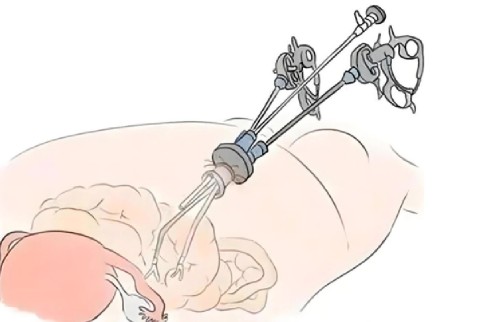
Single-port laparoscopic surgery (LESS) is developed based on the burgeoning natural orifice endoscopic surgery (NOTES) concept, aiming to reduce or conceal surgical scars, alleviate postoperative pain, and promote postoperative recovery.
Transumbilical single-port laparoscopic surgery (TU-LESS) allows the surgical incision to be hidden within or around the umbilicus, leaving virtually no scar.
Operational Logic: Utilizing an instrument design that "converges outside the body and disperses inside," dissection, cutting, hemostasis, and suturing are performed within a confined space, with full visual monitoring. Technical Advantages: Compared to multi-port laparoscopy, it reduces the number of incisions, minimizes abdominal wall damage, and utilizes the natural folds of the umbilicus to conceal scars, achieving a "no visible scar" effect.
Why Choose Single-Port Laparoscopy?
1. Patient Perspective: Enhanced Experience and Accelerated Recovery
1) Aesthetic Needs: The umbilical incision heals seamlessly with skin folds, leaving virtually no visible scar, especially appealing to young women and those who have not yet given birth.
2) Reduced Pain: The single-port design minimizes abdominal wall nerve damage, resulting in a 30%-50% reduction in postoperative pain scores (VAS) compared to multi-port laparoscopy. Patients can get out of bed and move around within 6 hours post-surgery.
3) Shorter Recovery Time: The average postoperative hospital stay is shortened by 1-2 days, and the incidence of postoperative complications (such as incision infection and abdominal wall hematoma) is reduced to below 1%, lower than the 3%-5% of multi-port laparoscopy.
2. Clinical Level: Precise Operation and Safety Assurance
1) Clear Vision: High-definition laparoscopic lenses (1080P/4K) provide a 20-30x magnified view of the abdominal cavity, clearly identifying blood vessels, nerves, and small lesions, reducing the risk of intraoperative injury;
2) Flexible Operation: Specialized curved instruments can be adjusted at multiple angles, offering superior flexibility compared to traditional multi-port instruments when operating on deep pelvic organs such as the uterus and ovaries, especially suitable for complex myomectomy and ovarian cyst removal surgeries;
3) Easier Specimen Acquisition, Better Adherence to the Tumor-Free Principle;
4) Broad Indications: Single-port laparoscopic treatment can be achieved for a wide range of conditions, from benign diseases (uterine fibroids, ovarian cysts, endometriosis) to early-stage gynecological malignancies (cervical cancer, endometrial cancer, ovarian cancer).
Applications of Single-Port Laparoscopy in Gynecology
Single-port laparoscopic surgery can be used to treat a wide range of conditions, from benign diseases (uterine fibroids, ovarian cysts, endometriosis) to early-stage gynecological malignancies (cervical cancer, endometrial cancer, ovarian cancer).
(1) Adnexal surgery;
(2) Uterine lesion resection surgery;
(3) Total hysterectomy;
(4) Adhesion lysis of pelvic tracts;
(5) Surgery for reproductive tract malformations;
(6) Pelvic floor reconstruction surgery, such as high uterosacral ligament suspension and vaginal- sacral fixation;
(7) Early-stage gynecological malignancies.


 (+86)18613012387
 info@royallee.cn
 EN
EN CN
CN TH
TH IDN
IDN  AR
AR Customer satisfaction