A few months ago, Ms. Li (a pseudonym) began experiencing dysmenorrhea. The 45-year-old had experienced regular, pain-free periods for the past few years, which she hadn't worried about, as rest often alleviated the pain. However, over the next few months, she experienced recurring abdominal pain during her period. She sought consultation with Dr. Wang Meilin in our hospital's gynecology department.
A transvaginal ultrasound revealed a hypoechoic mass on the right side of the uterus, measuring approximately 67 x 59 mm. Dr. Wang Meilin, a gynecology team member, thoroughly assessed Ms. Li's condition and determined that surgical removal of the fibroid was feasible.
"Will the surgery be very traumatic for such a large uterine fibroid?" Faced with Ms. Li's confusion, Director Wang Meilin gave a detailed scientific explanation and analyzed the advantages and disadvantages of mainstream surgeries such as traditional open surgery, multi-port laparoscopic surgery, and single-port laparoscopic surgery.
After receiving the detailed explanation from Director Wang Meilin, Ms. Li gained a new understanding of the surgical method, calmed down, and decided to choose transumbilical single-port laparoscopic surgery.
On September 6th, with the collaborative efforts of the anesthesiologist and operating room nurses, Dr. Wang Meilin's gynecology team performed a single-port laparoscopic transumbilical myomectomy and laparoscopic pelvic adhesion lysis. During the procedure, a large myoma, approximately 7 cm in diameter, was removed. Thanks to the collaborative efforts of all parties, the surgery was successfully completed.
Ms. Li experienced minimal pain after the surgery and was able to get out of bed and move around on her own that same evening. She was able to eat normally, and her wound healed well, with no surgical scars visible unless carefully observed. She was very satisfied with the results. Three days after the surgery, she was successfully discharged from the hospital after a thorough evaluation.
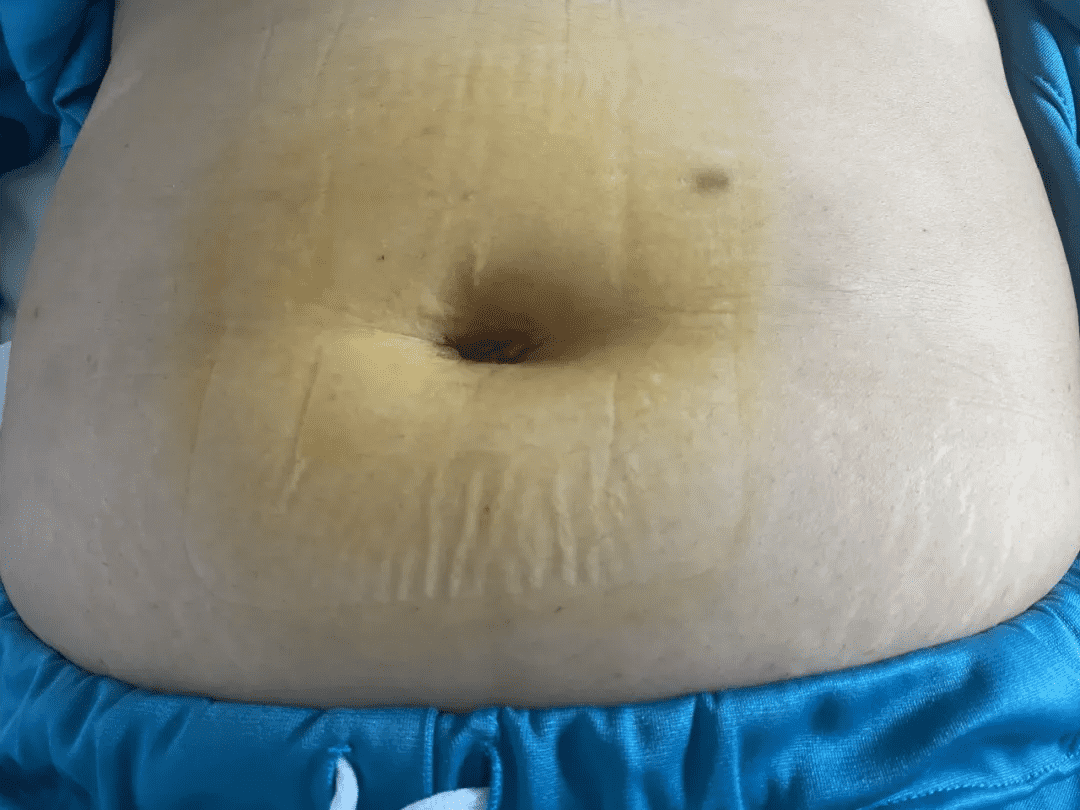
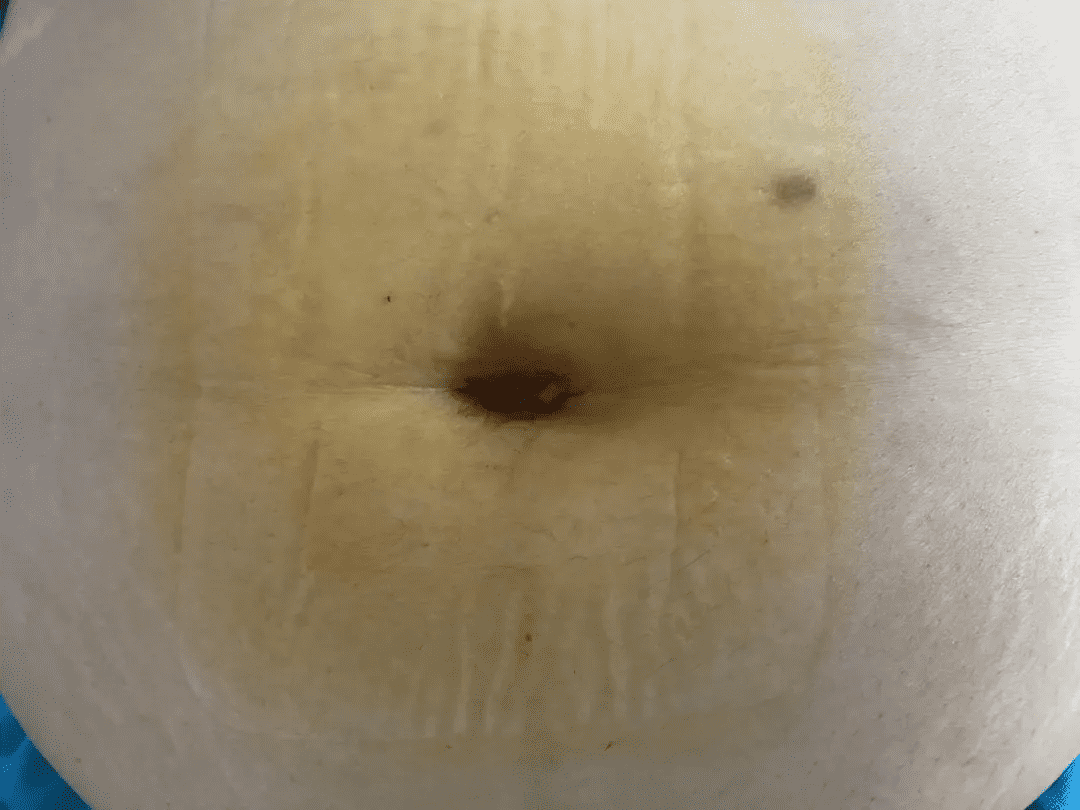
The picture shows the incision after suture
What are uterine fibroids?
Uterine fibroids are the most common benign gynecological tumors in women, primarily caused by the proliferation of uterine smooth muscle cells. With the increasing awareness of physical examinations and advancements in ultrasound technology, an increasing number of women aged 30 to 50 are experiencing uterine fibroids of varying sizes and numbers.
Most patients are asymptomatic, but some women experience clinical manifestations such as increased menstrual flow, anemia, abdominal pain, frequent urination, constipation, and infertility due to the location of the disease and its gradual growth, which seriously affects women's health and quality of life.
Generally, uterine fibroids larger than 5 cm can be removed through various methods such as laparotomy, laparoscopy, hysteroscopy, and vaginal resection. Different surgical options are generally selected based on the size and location of the fibroids, the patient's physical condition, and the patient's needs.
Transumbilical single-port laparoscopic surgery
Transumbilical single-port laparoscopic surgery is a procedure in which a puncture device with multiple operating channels is inserted through a single small incision (1.5-3 cm) in the navel, and surgical instruments are inserted through the operating channels to complete the surgical operation. It is one of the most cutting-edge minimally invasive technologies currently available.
Compared with traditional multi-port laparoscopic surgery, transabdominal single-port laparoscopic surgery has many advantages: The incision is made at the "umbilicus" where the human body has a natural scar, the skin incision is small and beautiful; specimen collection is fast and safe, which is more in line with the tumor-free principle; postoperative pain is lighter, which is in line with the concept of rapid recovery.
Limitations of single-port laparoscopic surgery: Because the instrument insertion sites are relatively concentrated, the instruments interfere with each other, forming a "chopstick effect", which significantly increases the difficulty of the operation and places extremely high technical requirements on the surgeon.
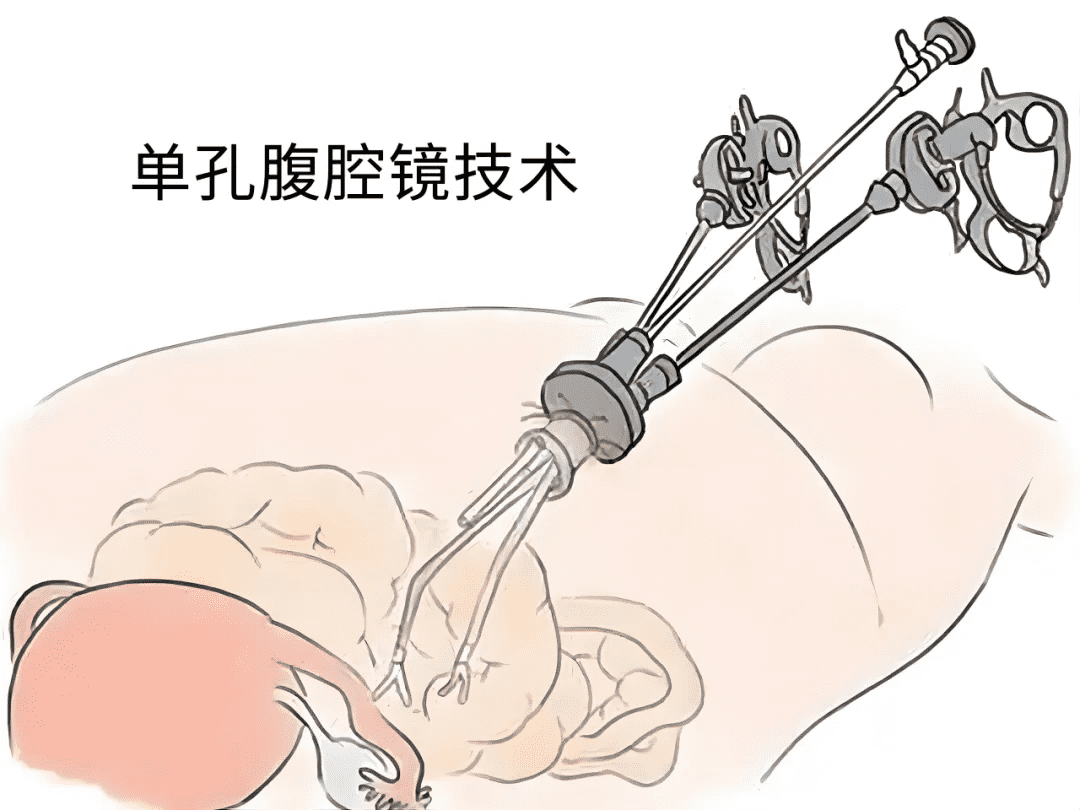
Single-port laparoscopic technique


 (+86)18613012387
 info@royallee.cn
 EN
EN CN
CN TH
TH IDN
IDN  AR
AR Customer satisfaction