Legal Notice: The patient information in this article has been anonymized. Treatment experiences reflect individual circumstances only and are not a guarantee of efficacy. Specific treatment plans should be developed by the attending physician.
01 Poor postoperative healing and large area of necrosis of the neck flap
Mr. Lin was in his thirties when he suffered a huge blow - the malignant tumor of the tongue recurred. He underwent "extended resection of the left floor of mouth malignant tumor + segmental resection of the left mandible + selective lymph node dissection of the left neck + vascular exploration of the left anterolateral femoral flap + transfer and repair of the left pectoralis major myocutaneous flap + titanium plate internal fixation + tracheotomy" in another hospital.
He originally thought that surviving such a complicated operation would be the end of the difficulties. However, on the 17th day after the operation, the wound problem made Mr. Lin miserable. A large area of skin flap necrosis (about 36cm²) appeared on the left side of his neck, and the median incision on his mandible was dehiscent and infected, with foul-smelling pus oozing out.
The serious wound problem not only brought him persistent pain, leakage problems and infection risks, but also put his life into trouble when he should have been focusing on recovery.
02 The nursing department implements precise measures to restore healthy skin tissue in two weeks
After much inquiry, Mr. Lin came to the Department of Surgery at Guangzhou Royal Cancer Hospital for treatment. Faced with the complexities of poor postoperative wound healing, our head nurse, Guo Hanfang, led the nursing team to implement precise measures:
1. The core concept of moist healing: abandon traditional dry therapy and create a moist environment conducive to wound healing.
2. Use functional healing-promoting dressings : According to the different stages of the wound (large amounts of exudate, infection control, granulation growth, epithelial crawling), scientifically select highly absorbent dressings, silver-containing dressings, hydrocolloid dressings, etc. to effectively manage exudate, control infection, and promote tissue growth.
3. Conservative sharp debridement: Based on accurate assessment, necrotic tissue is gently removed to maximize the protection of healthy tissue.
4. Negative pressure therapy (NPWT): For deep-seated and exudate-prone areas, controlled negative pressure is used to promote drainage, reduce edema, and stimulate granulation growth.
03 Relieve patients' pain and avoid the harm of reoperation
After systematic and meticulous nursing intervention, Mr. Lin's wound condition improved significantly: infection was controlled, malodor disappeared, and exudate was significantly reduced. Healthy, rosy granulation tissue developed at the base of the wound, and clear signs of epithelialization (new skin coverage) were visible at the edges. The wound area and depth were significantly reduced.
Ultimately, Mr. Lin was spared the need for another high-risk revision surgery and was able to return to the local hospital for continued dressing changes until he recovered. This not only significantly alleviated his physical and mental pain, but also avoided the huge financial burden of a second surgery.
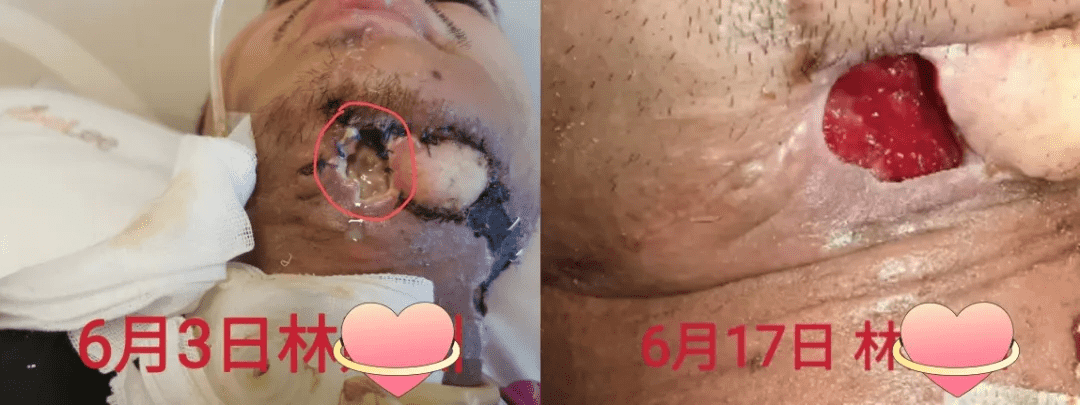
Comparison of wounds on June 3 and June 17
Nursing Tip: What is Moist Healing?
A moist healing environment can keep the wound surface moderately moist, which is conducive to cell migration and the function of growth factors, thereby accelerating healing. At the same time, functional dressings can more effectively manage exudate, isolate bacteria, and reduce pain and damage during dressing changes. It is an important concept in modern wound care.
PROFILE
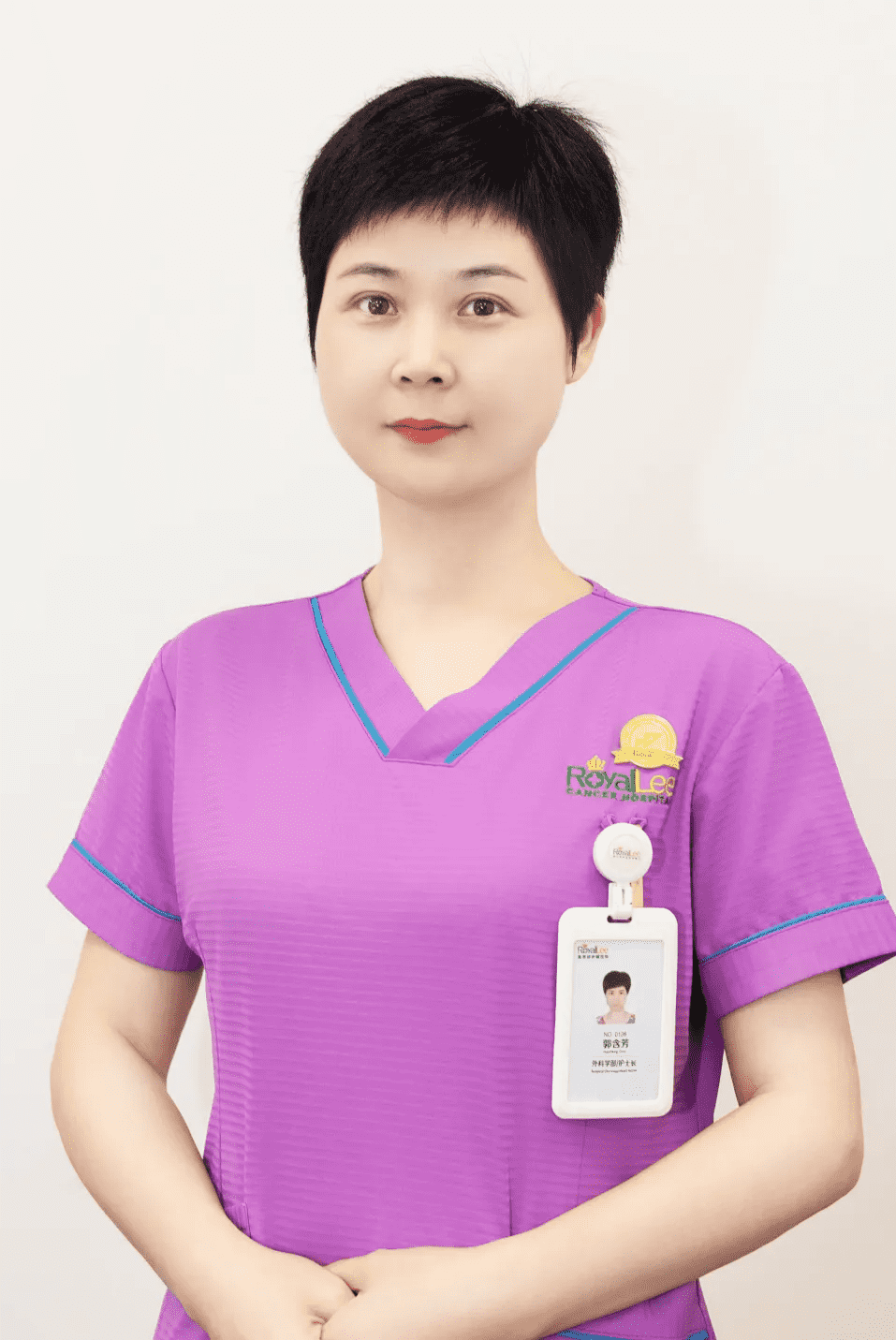
Guo Hanfang
Head nurse
Head nurse of Department of Oncology and Department of Internal Medicine III
Wound and stoma specialist nurses in Guangdong Province;
Oncology specialist nurses in Guangdong Province;
PICC catheterization nurses in Guangdong Province
【Areas of expertise】
Wound treatment: treatment and care of various chronic wounds including cancerous wounds, lymphedema, pressure injuries, poor wound healing after surgery, ostomy complications, pharyngeal fistula, esophageal airway fistula, radiation dermatitis, incontinence dermatitis, etc.
Intravenous catheterization: PICC placement and maintenance, treatment and care of complications of PICC, CVC, and infusion ports;
Traditional Chinese Medicine Nursing: balanced cupping, warming and unblocking scraping, auricular acupressure, Du-point moxibustion, moxibustion, pestle needling and other appropriate TCM nursing techniques.
Academic Position:
- Standing Committee Member of the Clinical Support and Nursing Branch of Guangdong Health Care Association
- Standing Committee Member of the Ostomy Wound Branch of Guangzhou Nursing Association
- Member of the Tumor Hyperthermia Therapy Professional Committee of the Guangdong Anti-Cancer Association
- Member of the Wound Ostomy Branch of the Guangdong Nursing Association
- Member of the Guangdong Provincial Non-public Medical Nursing Committee


 (+86)18613012387
 info@royallee.cn
 EN
EN CN
CN TH
TH IDN
IDN  AR
AR Customer satisfaction