

 (+86)18613012387
 info@royallee.cn
 EN
EN CN
CN TH
TH IDN
IDN  AR
AROn the afternoon of January 22, 2026, driven by the proactive efforts of internationally renowned oncology expert Professor Li Dinggang, International Chief Medical Advisor of Guangzhou Royal Lee Cancer Hospital, the strategic cooperation signing ceremony between Guangzhou Royal Lee Cancer Hospital and SIBiono (Shenzhen) GeneTech Co., Ltd. was successfully held.
As a key driver of this collaboration, Professor Li Dinggang firmly believes that the most powerful driving force for cross-border healthcare is technological innovation. Only innovative drugs, technologies, and therapies can bring substantial hope to patients worldwide. The collaboration between Royallee Hospital and SIBiono in the field of gene therapy is a concrete practice based on this cutting-edge concept.
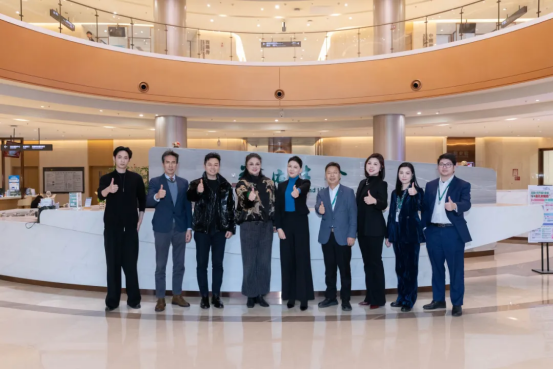
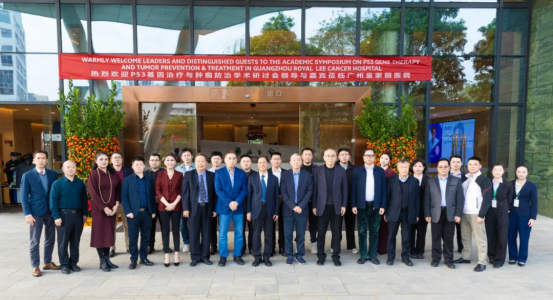
Ms. Xu Wei, Chairwoman of SIBiono (Shenzhen) GeneTech Co., Ltd., and Ms. Cai Bin, Assistant to the Chief Scientist, visited the hospital and held in-depth and friendly talks with the hospital management team, including Ms. Ma Lanying, Executive Vice President of Royallee Hospital, and Mr. Wu Jie, Vice President of Operations. They jointly signed the strategic cooperation agreement. This marks the official partnership between a high-end clinical diagnosis and treatment platform and globally leading original gene therapy technology, aiming to jointly explore innovative models for precision cancer prevention and treatment.
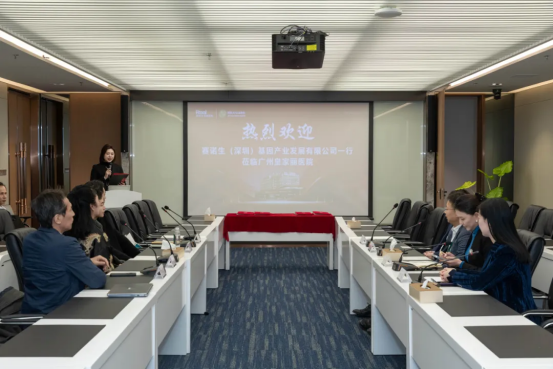
01 Focusing on the Frontier: Embracing the Era of Innovation and Translation in Biomedicine
This collaboration comes at a strategic window when Guangzhou and the nation are vigorously promoting the innovation and translation of the biomedicine and health industry. In recent years, Guangzhou has been committed to building a new service paradigm integrating "research-translation-industry" and accelerating the clinical translation and application of scientific and technological achievements through innovative initiatives such as establishing the nation's first government-led Research Hospital Alliance. The partnership between Royallee Hospital and SIBiono is a concrete step towards actively integrating into this "hospital-enterprise collaborative innovation ecosystem," aiming to contribute to the standardized and high-quality development of cutting-edge technologies through direct dialogue between clinical needs and scientific innovation.
Both parties have clearly stated that they will strictly adhere to national laws, regulations, and industry ethical standards in exploring such cutting-edge technologies. All clinical research and collaborations will be prudently advanced within a safe and compliant framework, jointly committed to providing patients with more advanced and diverse treatment options.
02 Integrating Strengths: Two-Way Empowerment of Clinical Excellence and Source Innovation

During the talks, Ms. Ma Lanying, Executive Vice President of Royallee Hospital, elaborated on the hospital's positioning as a high-end medical platform. Relying on its Multidisciplinary Team (MDT) model and full-cycle health management system, the hospital is dedicated to providing patients with dignified and high-quality medical services.
She specifically pointed out that the hospital is located within the core health industry cluster of the China-Singapore Guangzhou Knowledge City, a national-level bilateral cooperation project. In response to global health needs, Royallee Hospital is fully committed to building a bridge connecting Chinese medical innovation with the international market, aiming to enable top-tier Chinese medical technologies, drugs, and treatment protocols to reach the world and serve global patients more smoothly through this platform.
She stated that collaborating with a source innovation enterprise like SIBiono with a global vision is not only a crucial strategic move for the hospital to practice the "clinical-driven research" philosophy and enhance its capabilities in preventing and treating major diseases, but also a key step in actively responding to the city's development strategy. Leveraging the international platform of Sino-Singapore cooperation, it aims to introduce top-tier global medical resources and treatment protocols, providing patients in the Guangdong-Hong Kong-Macao Greater Bay Area and beyond with medical services of international standards.

Ms. Xu Wei, Chairwoman of SIBiono (Shenzhen) GeneTech Co., Ltd., introduced the company's global leading position in the field of gene drugs. The self-developed gene therapy anti-cancer drug "Recombinant Human p53 Adenovirus Injection" (also known as "Gendicine®") was approved by China's State Food and Drug Administration in 2003, making it the world's first approved cancer gene therapy drug.
Chairwoman Xu Wei stated that Royallee Hospital's outstanding clinical service platform, rigorous quality management system, and profound understanding of personalized diagnosis and treatment make it an ideal partner to maximize the clinical value of gene therapy technology and benefit more patients.
The P53 Gene and Its Therapeutic Value: Why Targeting P53 is Key
1. Loss of the "Genome Guardian": P53 is the core tumor suppressor gene in the human body, responsible for monitoring DNA damage and determining cell repair or apoptosis. Over 50% of malignant tumors have P53 gene mutations or functional inactivation, leading to the failure of this critical "braking system," resulting in uncontrolled cell proliferation and resistance to therapy.
2. Core Therapeutic Value of the Drug: Gendicine® utilizes "gene supplementation therapy." It employs a modified adenovirus as a vector to deliver a functional copy of the p53 gene precisely into tumor cells, correcting the error at its source.
3. Restoring "Brake" Function for Multiple Anti-Tumor Effects: When tumor cells re-express normal P53 protein, it exerts the following key roles:
* Direct Inhibition and Apoptosis: Commands cancer cells to stop dividing and initiates the apoptosis program.
* Synergistic Sensitization: Significantly increases the sensitivity of tumors to radiotherapy and traditional chemotherapy – one of its important clinical values.
* Immune Activation: Induces the body to produce specific anti-tumor immune responses, establishing immune surveillance.
Key Highlights of P53 Drugs
1. Pioneering Status: As the world's first approved cancer gene therapy drug, it holds milestone significance, proving the feasibility of translating gene therapy from theory to clinical practice.
2. Unique Mechanism of Action: It works not by external "poisoning," but by internal "error correction," restoring the body's most important tumor suppressor pathway to fight cancer – fundamentally different from traditional approaches.
3. Precise Positioning as a "Radiotherapy/Chemotherapy Sensitizer": Its most mature clinical application is in combination with radiotherapy and chemotherapy. For locally advanced tumors resistant or insensitive to these treatments, it can effectively reverse drug resistance and enhance overall efficacy.
4. Relatively Favorable Safety Profile: As the vector virus cannot self-replicate and is often administered locally, its side effects (such as local reactions, transient fever) are generally more manageable than the toxicity of systemic chemotherapy.
03 Drawing a Blueprint: Launching the "Royallee International Gene Medicine Center" Construction
Witnessed by the attending guests, Vice President Ma Lanying and Chairwoman Xu Wei officially signed the strategic cooperation agreement on behalf of their respective institutions. According to the agreement, both parties will integrate advantageous resources to jointly advance clinical research, technology translation, and academic exchanges in the field of tumor gene therapy.
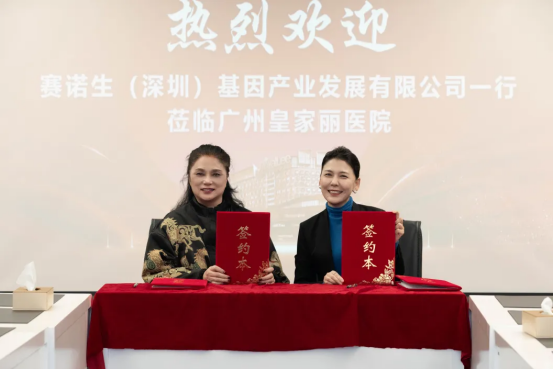
As the first key milestone of this collaboration, both parties plan to hold the cooperation project launch ceremony and the inaugural thematic academic symposium on February 5, 2026. Experts in the field will be invited to discuss the cutting-edge progress and clinical practice of tumor gene therapy.
This strategic cooperation between Royallee Hospital and SIBiono GeneTech represents not only a complementarity of resources and capabilities between the two institutions but also a practical exploration of building an industry-university-research-medicine collaborative innovation system. Taking this signing as a starting point, both parties will jointly explore new pathways for the deep integration of cutting-edge biotechnology and top-tier clinical services, helping Guangzhou build a global benchmark city for biomedical innovation and injecting new vitality into the development of precision medicine.



 Customer satisfaction