
 (+86)18613012387
 info@royallee.cn
 EN
EN CN
CN TH
TH IDN
IDN  AR
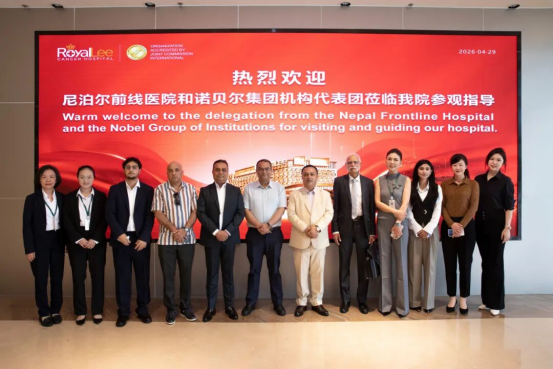
AROn April 29th, a signing ceremony embodying Nepal's high hopes for medical and health cooperation concluded successfully at Guangzhou Royal Lee Hospital. Following a preliminary on-site inspection and strong endorsement by the Consulate General of Nepal in Guangzhou, a core delegation of Nepalese medical and educational experts, specially introduced by the Consulate, visited the hospital. After in-depth visits and exchanges, they officially signed a strategic cooperation memorandum, marking the full launch of high-level cooperation between the two sides in areas such as precision oncology diagnosis and treatment, cross-border medical care, and medical education, adding a significant chapter to the mutual empowerment of health between the two countries.
01
Consulate's strong endorsement:
Royal Lee becomes the "benchmark choice" for cross-border medical care between China and Nepal.
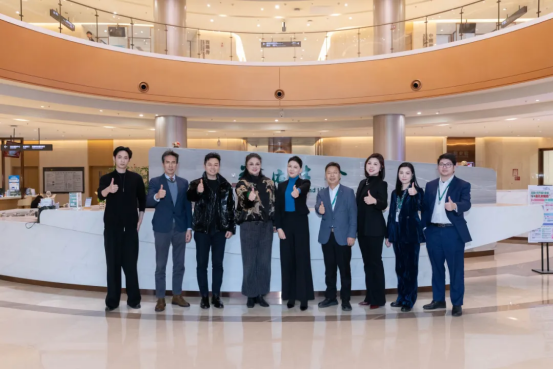
This cross-border cooperation was initiated by the authoritative recognition and strong support of the Consulate General of Nepal in Guangzhou. On April 1st, a delegation led by Mr. Bharat Khanal, Consul General of Nepal in Guangzhou, visited Royal Lee Hospital for a special inspection. Following the inspection, the Consulate highly praised the hospital's medical technology and international standard service quality, clearly recognizing it as a "high-quality benchmark platform" for Sino-Nepalese cross-border medical cooperation.
To facilitate the implementation of the cooperation, the Consulate specifically selected top medical resources from Nepal—the leading public hospital, the Bir Hospital of the National Academy of Medical Sciences of Nepal, and the Nobel Group of Nepal, which focuses on medical education and operations, along with its affiliated frontline hospitals—to facilitate a visit to Guangzhou by their core senior management and medical experts.
Ms. Ma Lanying, Vice President of Guangzhou Royal Lee Hospital, led the core team from international medical, nursing, and hospital administration departments to warmly receive the delegation. She provided a detailed introduction to the hospital's development layout, discipline construction, international service system, and regional medical support advantages, emphasizing the hospital's strategic positioning of leveraging the biomedical industry resources of the Knowledge City to build a platform for precision oncology diagnosis and treatment, international medical education, and cross-border medical services. This presentation garnered high recognition and strong interest from the Nepalese delegation.

Ms. Ma Lanying
A Powerful Alliance:
Medical and Educational Philosophies in Harmony, Expanding New Dimensions of Cooperation
The Nepalese delegation visiting Nepal comprised key decision-makers in the local healthcare and education sectors, demonstrating both strength and demand:
The Nobel Group of Institutions: With years of experience in education and healthcare operations, the group has established a unique "school-to-expert" ecosystem, serving thousands of students and patients throughout Nepal. The delegation was represented by the hospital's two founders and CEO.
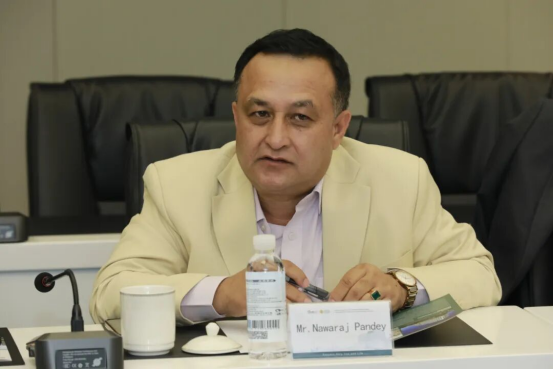
Mr. Nawaraj Pandey
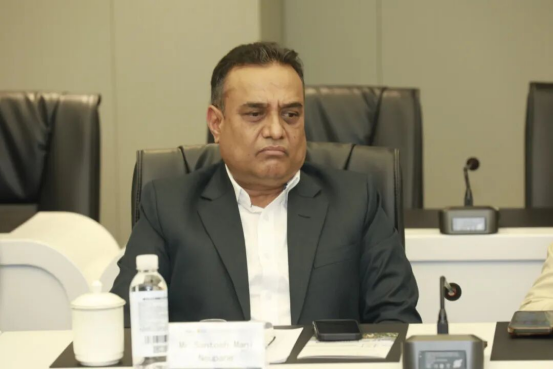
Mr. Santosh Mani Neupane
Bir Hospital, the National Academy of Medical Sciences of Nepal, is the country's oldest and largest public teaching hospital, bearing the heavy responsibility of referring complex and critical cases and training medical personnel nationwide. Its visit to Guangzhou aims to solidify its core position in Nepal's public healthcare system through international cooperation and exchange.
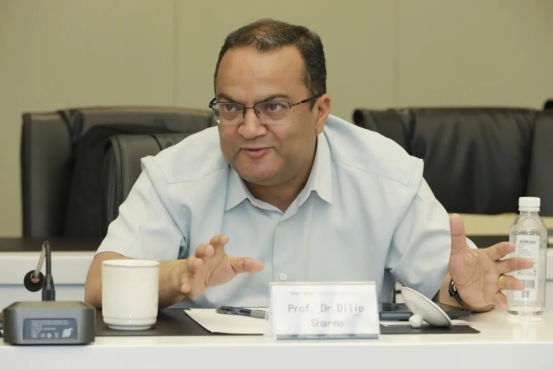
Prof. Dr. Dilip Sharma
Frontline Hospital, a leading general hospital in Kathmandu, Nepal, under the Nobel Group, is currently focusing on building an oncology center, highlighting its urgent need for medical development.
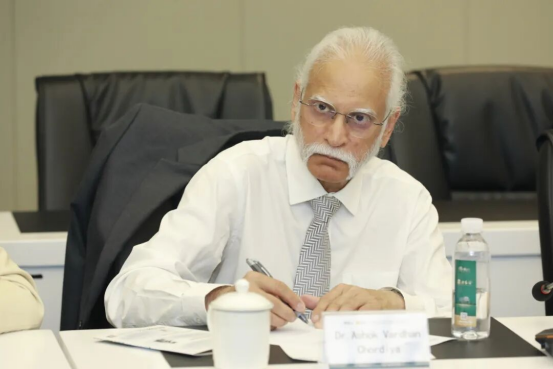
Dr. Ashok Vardhan Chordiya
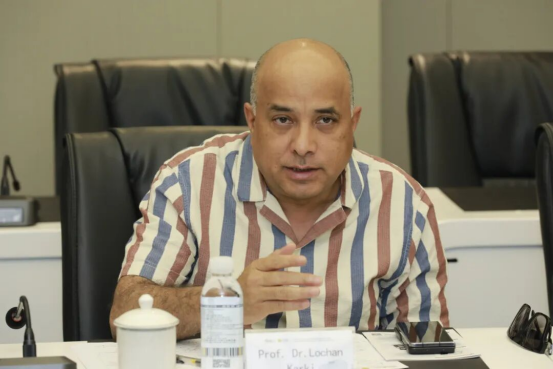
Prof. Dr. Lochan Karki
Notably, both parties share a common vision for the collaborative development of higher education and high-end medical care. Guangzhou Royal Lee Hospital, leveraging the high-quality educational resources of Zhanjiang University of Science and Technology under its chairman's Cunjin Education Group, has established a collaborative education system between the university and the hospital. Meanwhile, the Nepal Nobel Group is a leader in medical education. This shared focus on educational resources and talent cultivation models opens up a unique dimension for cooperation.
The Nepalese delegation acknowledged that Nepal is currently at a critical juncture in its disease spectrum transformation, with a continuously rising burden of chronic diseases such as malignant tumors. However, there is a shortage of precision treatment technologies and high-end medical talent. Guangzhou Royal Lee Hospital's mature experience in diagnostic and treatment technologies, medical education, and talent cultivation is precisely the resource it urgently needs for cooperation.
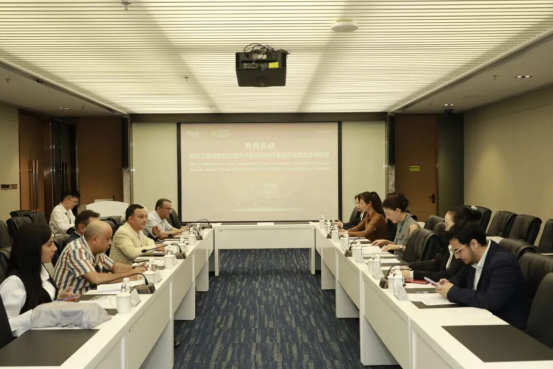
Vice President Ma Lanying stated that China and Nepal are geographically close and share strong people-to-people ties. Multiple daily direct flights, with a flight time of less than 4 hours, provide natural convenience for cross-border medical cooperation. Royal Lee will adopt an open, pragmatic, and win-win approach, working hand in hand with Nepalese medical colleagues to conduct in-depth collaboration in areas such as cancer treatment, talent training, and technological innovation, contributing to the common development of health and education in both countries.
03
Deepening Cooperation in Five Key Areas:
Building a Comprehensive Network for China-Nepal Health Cooperation
Following friendly and pragmatic discussions, both parties established a long-term and stable strategic cooperative relationship, focusing on five core areas to achieve in-depth implementation and comprehensively build a bridge for China-Nepal medical and health cooperation:
1. Integrated Precision Oncology Diagnosis and Treatment: Jointly build a high-end oncology treatment center, open a green channel for cross-border two-way referrals, and realize a closed-loop service of "initial screening in Nepal + Royal Lee's precision treatment + Nepalese rehabilitation follow-up"; export cutting-edge diagnosis and treatment technologies to Nepal through remote consultations and MDT case discussions on difficult cases.
2. Collaborative Development of Medical Education: Relying on the educational resources of Zhanjiang University of Science and Technology, founded by the investors of Guangzhou Royal Lee Oncology Hospital, conduct activities such as mutual visits of medical teachers and students, short-term training, and joint research, share international cutting-edge medical education concepts and clinical practice platforms, create an international model of collaborative education between "university-hospital," and achieve mutual promotion of educational resources.
3. Collaborative Cultivation of International Nursing Talent: Leveraging the key international nursing program at Zhanjiang University of Science and Technology, advanced international nursing training models will be introduced. Both parties will cooperate to cultivate internationally-oriented nursing talent, with China supplying high-quality professional nurses to Nepal and receiving Nepalese nurses for further training. A cross-border nursing talent exchange and employment platform will be jointly established to enhance the professional competence of nursing personnel in both directions.
4. Medical Innovation and Resource Sharing: Collaborating with the biomedical innovation resources of the Sino-Singapore Guangzhou Knowledge City, in-depth cooperation will be carried out in areas such as innovative anti-tumor drugs, cutting-edge treatment technologies, and clinical pathway optimization.
5. Cross-border Medical and Academic Collaboration: Jointly organizing international academic forums, physician exchanges, and cross-border medical exchanges will promote the interconnection of high-quality medical resources between China and Nepal and South Asia, creating a benchmark for regional cross-border medical cooperation.
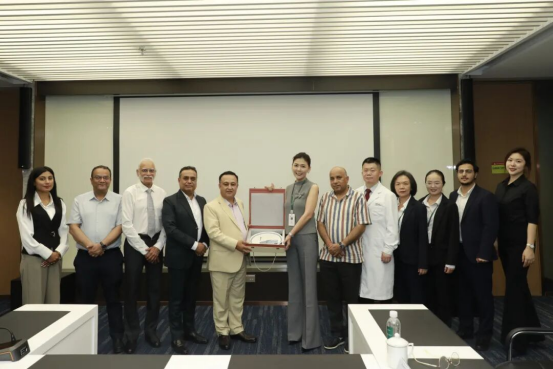
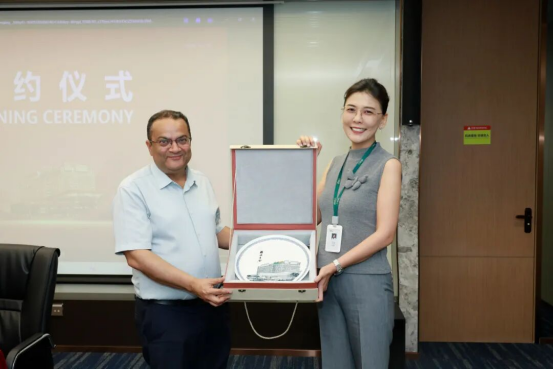
Both sides exchanged souvenirs.
Signing and Implementation:
Ushering in a New Journey of China-Nepal Health Cooperation
With all the guests present, both parties officially signed a strategic cooperation memorandum, marking the full implementation of this international medical strategic cooperation. The core members of the Nepalese delegation unanimously stated that they will use this cooperation as an important link to fully introduce the advanced diagnostic and treatment technologies, mature management experience, and educational resources of Guangzhou Royal Lee Hospital, striving to address Nepal's shortcomings in precision oncology treatment, medical innovation, and talent cultivation, and truly benefit the local people.
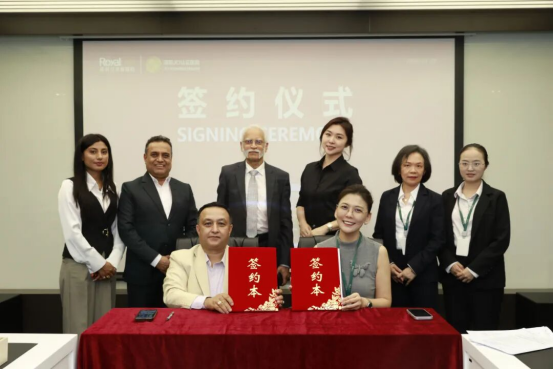
In the future, Guangzhou Royal Lee Hospital will continue to deepen international medical cooperation, connecting global high-quality resources with its superb medical skills, professional services, and international standards. Relying on the platform advantages of the Sino-Singapore Guangzhou Knowledge City, it will further strengthen two-way exchanges between China and Nepal in the fields of medical care, education, talent training, and pharmaceutical innovation, continuously improve the quality of cross-border medical services, bring better health protection to the people of China, Nepal, and South Asia, and help build a closer China-Nepal health community with a shared future.


 Customer satisfaction