

 (+86)18613012387
 info@royallee.cn
 EN
EN CN
CN TH
TH IDN
IDN  AR
ARRecently, Dr. Hu Zhongmin, Chief Physician and Director of the Critical Care Medicine Department at Guangzhou Royal Lee Cancer Hospital, and his team received two banners from the family of a foreign patient. The banners read: "Noble Medical Ethics, Excellent Medical Skills; Caring Nurses, Meticulous Nursing." Behind these banners is the story of a patient with tongue cancer who, after suffering multiple life-threatening crises including septic shock, respiratory failure, and renal insufficiency, was stabilized and successfully discharged thanks to the full-scale rescue efforts led by Dr. Hu Zhongmin and the ICU team.
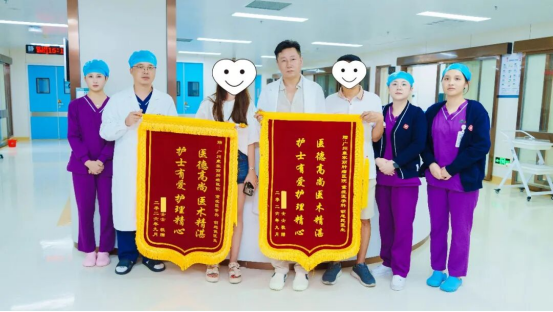
Seeking Medical Care in a Foreign Land, Condition Suddenly Turns Critical
Ms. L (pseudonym), 68 years old, a foreign national. She was diagnosed with tongue cancer four years ago and had undergone surgery, immunotherapy, chemotherapy, and proton radiotherapy. In August 2026, due to a sharp deterioration in her condition, she was urgently admitted to the ICU.
On admission, the patient was in septic shock: her fever reached 39.7°C, blood pressure fluctuated between 77-89/40-50 mmHg requiring continuous vasopressor support; pulmonary infection had progressed to respiratory failure necessitating endotracheal intubation and mechanical ventilation; she also had multiple organ problems including renal insufficiency, cardiac insufficiency, electrolyte imbalance, and nutritional risk.
This was a typical critical case of advanced cancer complicated by multiple organ dysfunction. The difficulty of treating such patients is far greater than that of ordinary critical care—it requires not only controlling life-threatening infection and organ failure, but also taking into account the special pathophysiological status of cancer patients to preserve opportunities for subsequent anti-tumor therapy.
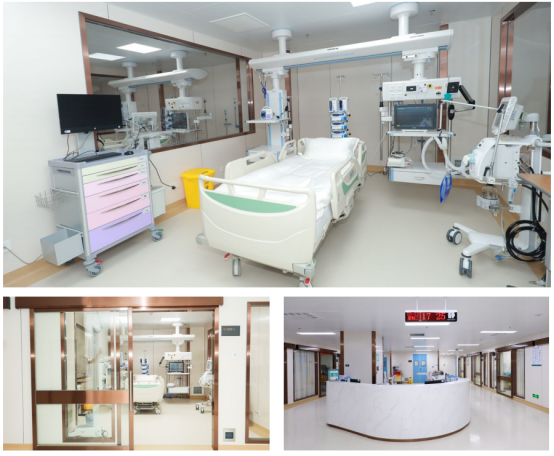
ICU Environment
ICU Rescue: Precision Treatment, Turning the Corner
Faced with such a complex condition, Dr. Hu Zhongmin led the ICU medical and nursing team in round-the-clock vigilance.
The rescue process was not easy: anti-infection treatment, mechanical ventilation, bedside blood purification, nutritional support, internal environment stabilization… every step required precise control. As the ICU of a cancer specialty hospital, Dr. Hu Zhongmin particularly emphasized that while saving the patient's life, it was essential to take into account the patient's oncology treatment background and preserve opportunities for subsequent anti-tumor therapy.
After nearly a month of full-scale treatment, the patient's condition gradually improved: the infection was controlled, body temperature returned to normal, blood pressure stabilized, and she was successfully weaned off the ventilator and underwent tracheostomy. At discharge, she was conscious, breathing spontaneously and steadily, with good oxygen saturation—she had turned the corner.
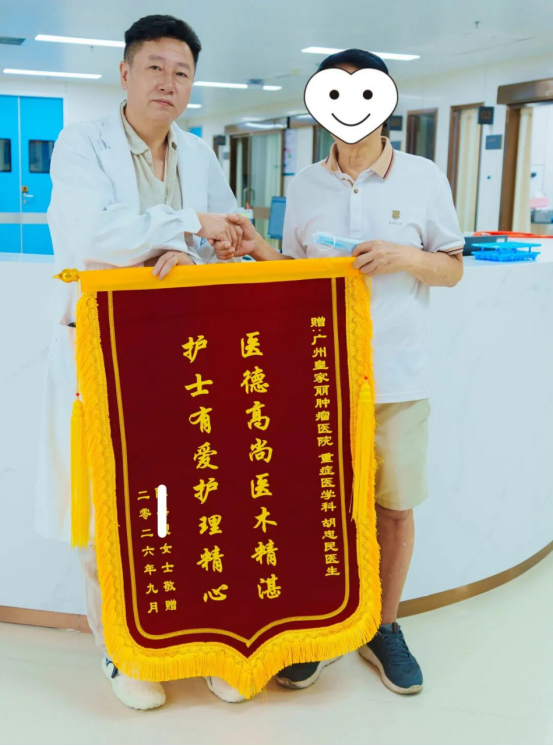
Humanized ICU: Letting a Foreign Patient Feel Warmth
In many people's impressions, the ICU is a cold place. But in Royal Lee's ICU, the team always puts the "person" first:
Daily communication: Doctors communicated with the family in detail every day about the patient's condition, explaining treatment progress in plain language.
Video visits: When infection control permitted, video "meetings" with family were arranged to relieve the patient's loneliness.
Meticulous nursing: Nurses not only performed professional procedures but also bathed the patient and soothed her emotions, caring for her like family.
Early activity and emotional support: Once the condition stabilized, the medical and nursing team promptly guided bedside activities and provided emotional comfort and psychological support.
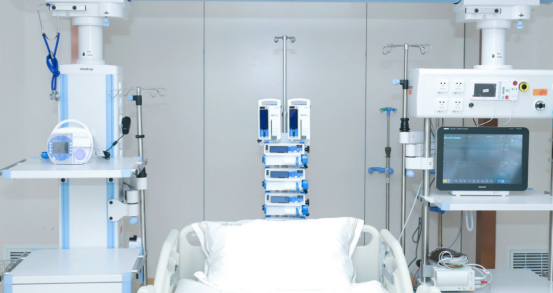
The Unique Value of an Oncology Specialty ICU
Critically ill cancer patients often have compromised immunity, poor organ reserve, and high infection risk due to the cancer itself or anti-tumor treatments. While a general ICU focuses on life support, an ICU in a cancer specialty hospital must also take into account the special status of cancer patients and create conditions for subsequent treatment.
Under the leadership of Dr. Hu Zhongmin, Royal Lee ICU relies on JCI international accreditation standardized management and the comprehensive strength of multidisciplinary collaboration to provide full-cycle rescue from emergency care to rehabilitation for critically ill cancer patients.
Because we are professional, we dare to fight; because we understand cancer, we better understand how to protect cancer patients.
The Critical Care Medicine Department of Guangzhou Royal Lee Cancer Hospital escorts life and walks with hope.
Important Notice: This article is for the health education reference of patients and their families only and does not constitute individualized diagnosis or treatment advice. Individual differences among cancer patients objectively exist. For specific diagnosis and treatment plans, please rely on the assessment of the attending physician.



 Customer satisfaction