

 (+86)18613012387
 info@royallee.cn
 EN
EN CN
CN TH
TH IDN
IDN  AR
ARFrom hours of intravenous infusion to just 5 minutes of subcutaneous injection in the outpatient setting, the treatment paradigm for advanced EGFR‑mutated lung cancer has undergone a major transformation. The world’s first subcutaneously injectable EGFR/cMET bispecific antibody — Amivantamab Subcutaneous Injection (brand name: Ruikejie) — was officially approved for marketing in China in December 2025, and Guangzhou Royal Lee Cancer Hospital is now able to prescribe it for eligible patients.
Lung cancer is the malignancy with the highest incidence and mortality in China, and EGFR gene mutations are particularly common among Asian patients with non‑small cell lung cancer. Previously, targeted therapy for these patients mostly required prolonged intravenous infusion, with each treatment taking several hours and frequent hospital visits for infusion, which significantly disrupted daily work and life. This new subcutaneous injection has completely changed the traditional infusion‑based treatment model.
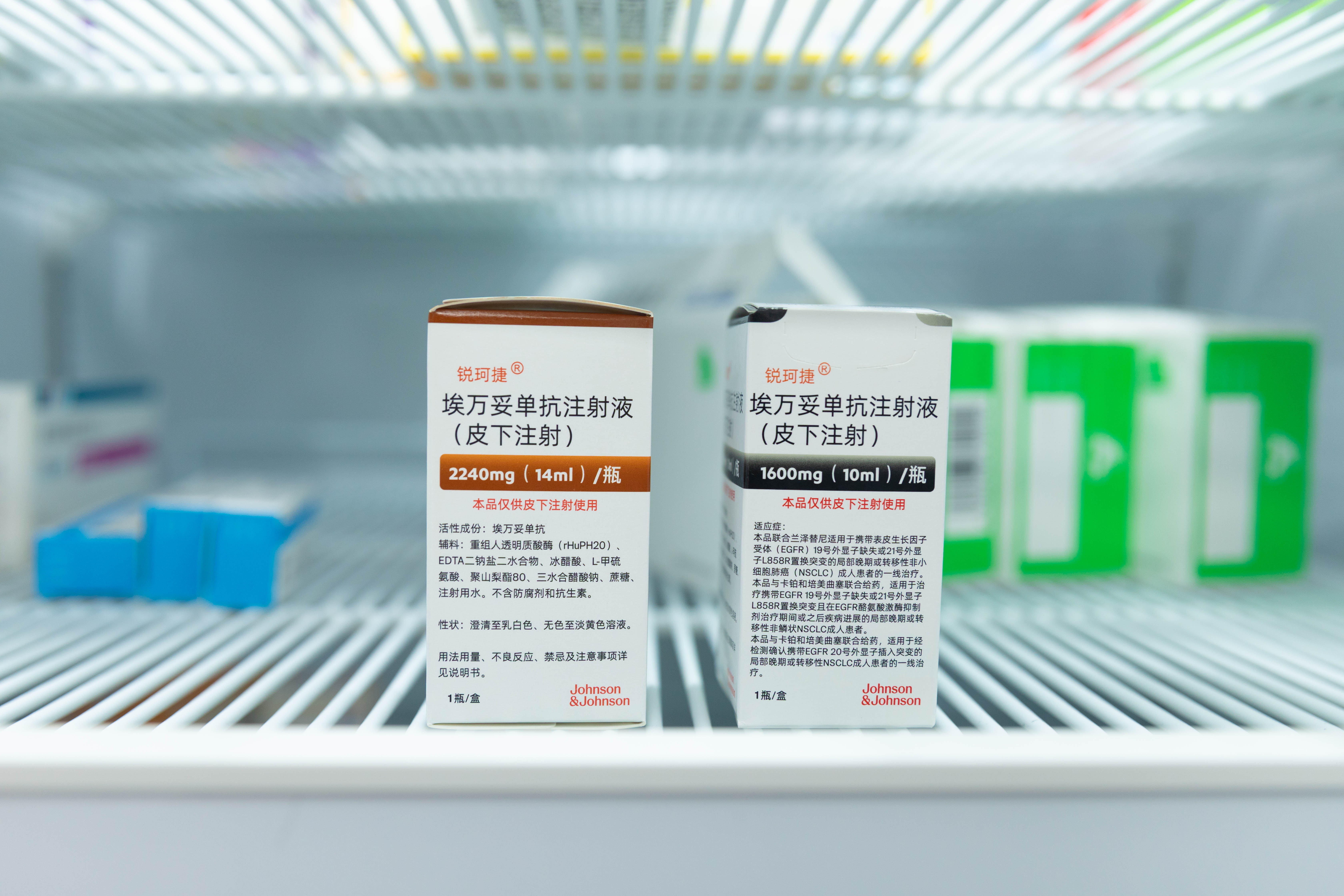
What is Amivantamab?
Amivantamab is a bispecific antibody that simultaneously targets both the EGFR and MET tumor growth pathways. It can be thought of as a “dual‑function key”: on one hand, it blocks two key pathways that drive rampant cancer cell proliferation, directly cutting off tumor growth signals; on the other hand, it recruits the body’s own immune cells to actively recognize and eliminate cancer cells. This subcutaneous injection utilizes recombinant human hyaluronidase technology, eliminating the need for long intravenous infusions. The injection itself takes less than 5 minutes, and patients do not need prolonged hospital stays — they can leave the clinic right after the injection, greatly improving the treatment experience.
Clinical Studies Confirm: Comparable Efficacy, Fewer Side Effects, and Higher Patient Preference
The approval of this subcutaneous formulation was supported by the PALOMA3, a large international Phase III comparative study that specifically compared the efficacy and safety of subcutaneous injection versus traditional intravenous infusion. The enrolled population consisted of patients with advanced lung cancer harboring common EGFR‑sensitive mutations who had progressed after osimertinib plus chemotherapy. The key results are summarized in plain language as follows:
1. Comparable antitumor efficacy. Subcutaneous injection achieved antitumor effects equivalent to those of intravenous infusion, with minimal differences in tumor response rates between the two groups. Tumor control was not compromised, and long‑term control data even favored the subcutaneous group.
2. Marked reduction in infusion‑related adverse reactions. Traditional intravenous infusion is prone to infusion reactions such as rash, fever, and chest tightness, with an incidence of 66% in the IV group; in contrast, the subcutaneous group had only 13% — the risk was reduced to one‑fifth, and severe allergic reactions and discomfort were significantly less frequent.
3. Huge time difference. The entire intravenous infusion process takes nearly 5 hours, whereas subcutaneous injection takes less than 5 minutes, saving substantial waiting and infusion time.
4. Better long‑term survival. At 12‑month follow‑up, the survival rate was 65% in the subcutaneous group versus 51% in the IV group, indicating that subcutaneous treatment further reduces the risk of death and provides superior long‑term survival benefits.
5. Overwhelming patient preference for subcutaneous injection. 81% of trial participants expressed a preference for subcutaneous injection, and 85% rated subcutaneous administration as “convenient” or “very convenient.”
Which Lung Cancer Patients Are Eligible for This Subcutaneous Injection?
There are three patient populations, all of whom are adults with advanced (locally metastatic or distantly metastatic) non‑small cell lung cancer:
1. First‑line treatment for newly diagnosed patients (who have not received prior systemic targeted therapy): in combination with lazertinib, for patients with EGFR exon 19 deletions or L858R classical sensitive mutations.
2. Second‑line treatment after resistance to targeted therapy: in combination with carboplatin and pemetrexed chemotherapy, limited to non‑squamous lung cancer patients with EGFR exon 19 deletions or L858R mutations who have progressed on prior EGFR‑targeted therapy.
3. First‑line treatment for EGFR exon 20 insertion mutations: in combination with carboplatin and pemetrexed chemotherapy, specifically for patients with EGFR exon 20 insertion mutations as their initial systemic treatment regimen.
Guangzhou Royal Lee Cancer Hospital: Bringing “5‑Minute Convenient Treatment” to Local Patients
The subcutaneous injection, which takes only a few minutes, not only shortens treatment time but also fundamentally improves patients’ quality of life during long‑term therapy. With uncompromised efficacy, fewer adverse reactions, and highly efficient and convenient administration, the subcutaneous formulation of amivantamab is reshaping the treatment paradigm for EGFR‑mutant advanced lung cancer. Guangzhou Royal Lee Cancer Hospital adheres to the high‑standard international JCI drug management specifications and has rapidly introduced this innovative subcutaneous formulation. If you or your family members have been diagnosed with advanced EGFR‑mutant non‑small cell lung cancer and are seeking a more convenient and better‑tolerated treatment option, you are welcome to visit our hospital for consultation and evaluation.



 Customer satisfaction